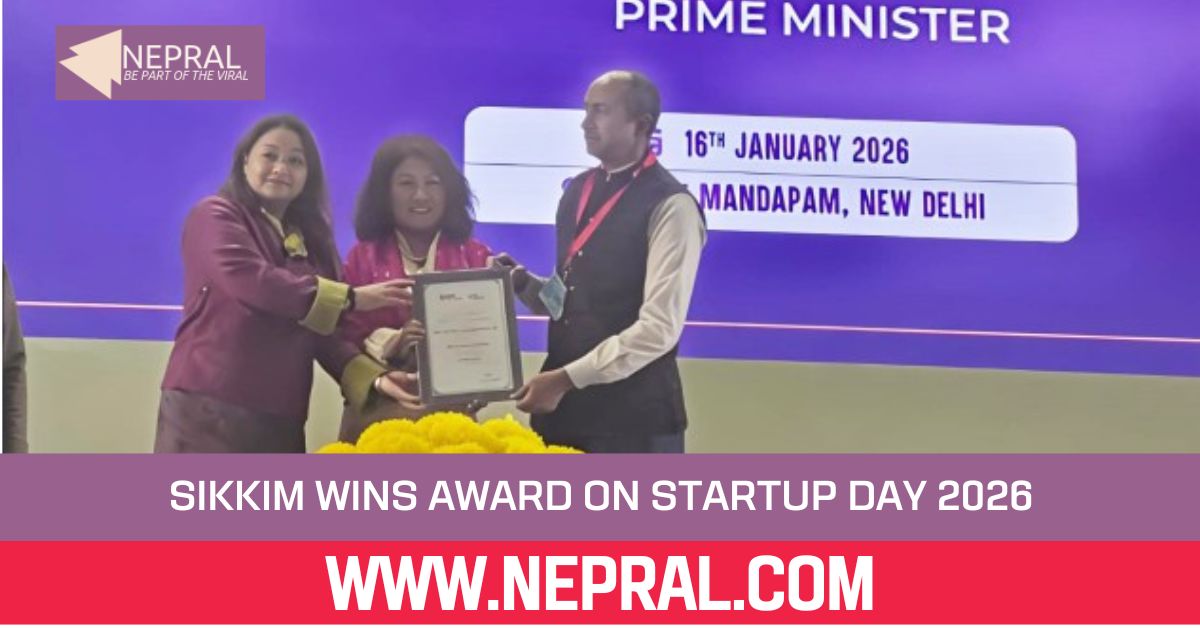


Startup India Turns 10: PM Modi Highlights Youth-Led Innovation, Calls for Global Leadership
As India marked a decade of the Startup India initiative on National Startup Day, Prime Minister Narendra Modi described the country’s startup journey as a transformation driven by youth ambition, risk-taking, and problem-solving rather than policy alone. Addressing startup founders, innovators, investors, and policymakers at Bharat Mandapam in New Delhi, the Prime Minister said the last ten years had laid the foundation for India to emerge as a global leader in innovation-led growth.
The event commemorated ten years since the launch of Startup India on January 16, 2016, a flagship initiative aimed at shifting India from a job-seeking economy to a nation of job creators. Over the decade, the programme has evolved into a multi-layered ecosystem supporting entrepreneurs from idea generation to global scaling.
From Policy Initiative to National Movement
In his address, the Prime Minister said the Startup India journey was not merely the success of a government scheme but “the story of millions of dreams taking shape.” Recalling the early days of the initiative, he noted that innovation and entrepreneurship were once confined to a limited section of society with access to capital and networks.
“Ten years ago, there were fewer than 500 startups in India. Today, the number has crossed two lakh,” he said, adding that India has grown into the world’s third-largest startup ecosystem. The country, which had only four unicorns in 2014, now has nearly 125 active unicorns, reflecting the scale and maturity achieved in a relatively short period.
According to official data, nearly 44,000 startups were registered in 2025 alone, marking the highest annual increase since the initiative began. The Prime Minister said these figures underline how startups are contributing not only to innovation but also to employment generation across sectors.
Youth, Risk-Taking and Real-World Solutions
The Prime Minister emphasised that what sets India’s startup ecosystem apart is its focus on solving real problems rather than chasing quick valuations. Referring to his interaction with young entrepreneurs from sectors such as agriculture, fintech, health, mobility, and sustainability, he said their confidence and clarity of purpose reflected a deeper cultural shift.
“Enterprise begins with courage,” he said, stressing that risk-taking, once discouraged in India, has now become socially accepted and even respected. He drew parallels between the startup mindset and governance decisions, noting that meaningful change often requires the willingness to take difficult risks for long-term public benefit.
He also highlighted the increasing participation of entrepreneurs from Tier-2 and Tier-3 cities and rural areas, stating that innovation is no longer limited to metropolitan hubs. This decentralisation, he said, has enabled grassroots problems to find locally relevant solutions.
Women-Led Startups and Inclusive Growth
A significant highlight of the decade-long journey has been the rise of women entrepreneurs. The Prime Minister noted that over 45 percent of recognised startups now have at least one woman director or partner, positioning India as the world’s second-largest ecosystem for women-led startup funding.
“This inclusiveness strengthens the country’s innovation capacity,” he said, adding that women-led enterprises are playing a crucial role in shaping sustainable and socially responsive business models.
Building the Innovation Ecosystem
The Prime Minister outlined several institutional reforms and infrastructure initiatives that have supported the startup boom. These include innovation-focused programmes in schools through Atal Tinkering Labs, nationwide hackathons to crowdsource solutions to public challenges, and the expansion of incubation centres to prevent early-stage ideas from failing due to lack of support.
He also pointed to regulatory reforms aimed at reducing compliance burdens. More than 180 provisions have been decriminalised under recent legislative changes, while self-certification and simplified exit norms have helped build trust between entrepreneurs and the state.
Access to markets, he said, has improved through digital platforms that connect startups with public procurement opportunities. Thousands of startups are now supplying goods and services to government departments, expanding their reach and revenue potential.
Financing Innovation and Preparing for the Future
Acknowledging that ideas need capital to reach scale, the Prime Minister highlighted government-backed funding mechanisms such as funds of funds, seed financing programmes, and credit guarantee schemes that enable collateral-free loans. He said these measures were designed to ensure that lack of capital does not become a barrier to creativity.
Looking ahead, he identified emerging technologies as critical to India’s economic and strategic future. Artificial intelligence, semiconductors, space technology, green hydrogen, and advanced manufacturing were cited as areas where startups must take the lead.
Referring to India’s preparations to host a global AI-focused summit in 2026, the Prime Minister said startups would play a central role in shaping indigenous solutions. He acknowledged challenges such as high computing costs but said national missions are working to make advanced infrastructure accessible to smaller enterprises.
Focus on Manufacturing and Global Leadership
While acknowledging India’s success in digital services, the Prime Minister urged startups to expand their presence in manufacturing and deep technology. “India’s ambition should not be limited to participation; it must aim for leadership,” he said, calling for world-class products and original technologies that can compete globally.
He concluded by expressing confidence in India’s startup community, stating that the achievements of the past decade have demonstrated the country’s capabilities. The next phase, he said, must focus on setting global benchmarks in innovation and entrepreneurship.
A Decade Completed, A Larger Journey Ahead
As Startup India completes ten years, policymakers and entrepreneurs alike view the milestone as a transition point rather than a destination. With a broad base of innovators, growing institutional support, and an increasingly risk-tolerant culture, the ecosystem is now positioned to address complex challenges at home and abroad. The coming decade, stakeholders believe, will test whether India can convert its startup scale into sustained global leadership.