
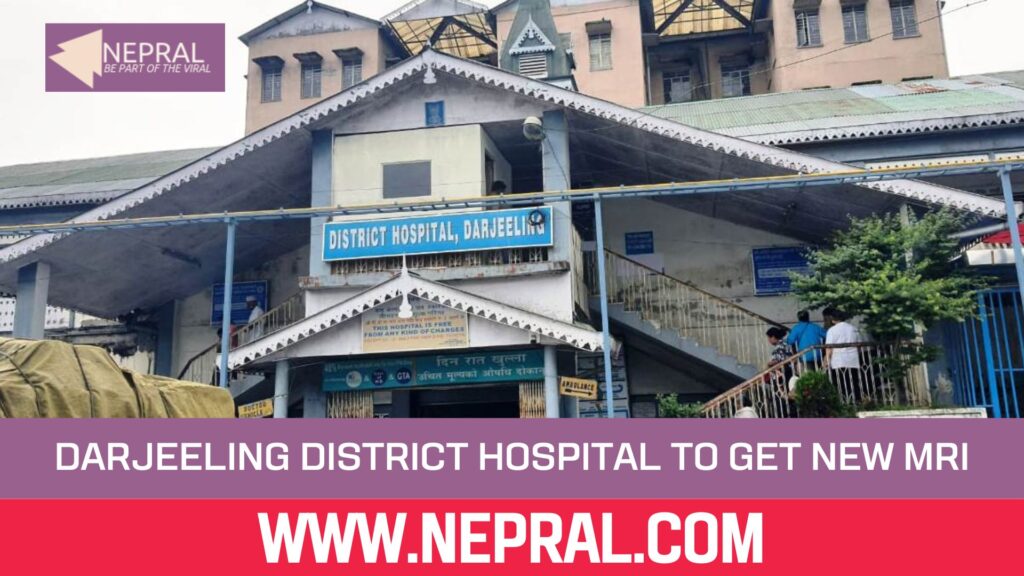

Darjeeling District Hospital to Get New MRI Machine After Year-Long Disruption
After more than a year of disruption that forced patients to seek costly diagnostic services outside the hills, Darjeeling District Hospital is set to receive a new MRI machine within the coming days. Health authorities have confirmed that the replacement will restore a critical diagnostic facility that had remained non-functional since 2024 due to persistent technical failures.
The prolonged breakdown of the MRI unit had placed a heavy burden on patients, particularly those from economically weaker sections who rely on the district hospital for affordable healthcare. With limited advanced diagnostic options available in the hills, many patients were compelled to travel long distances to tertiary hospitals in the plains, often at significant financial and physical cost.
MRI Breakdown Highlighted Gaps in Hill Healthcare Access
Magnetic Resonance Imaging is considered essential for diagnosing neurological disorders, spinal injuries, soft tissue damage, and several chronic conditions. The absence of a functional MRI facility at Darjeeling District Hospital underscored long-standing challenges faced by healthcare infrastructure in hill regions, where geography, power supply issues, and equipment maintenance often pose hurdles.
Local social organisations and patient groups had repeatedly raised concerns over the issue, pointing out that the disruption affected not only emergency cases but also routine diagnostics for long-term illnesses. Activists argued that the situation widened the healthcare gap between urban centres and remote hill areas, where public hospitals serve as the primary lifeline.
Authorities Confirm Replacement and Technical Upgrades
Hospital authorities have now stated that the faulty MRI unit is being replaced entirely with a new machine, expected to arrive within a week. Officials clarified that earlier attempts to repair the old equipment were unsuccessful due to multiple underlying issues related to infrastructure and power stability.
According to the Darjeeling District Hospital administration, one of the major problems was the lack of proper earthing and frequent voltage fluctuations, which repeatedly damaged sensitive components of the MRI system. To prevent similar issues in the future, corrective measures are currently underway.
“The necessary earthing work is being completed, and a specialised voltage stabiliser has been procured to ensure uninterrupted and safe operation of the new MRI machine,” said a senior official overseeing hospital administration. The stabiliser, sourced from outside the state, is expected to protect the equipment from power-related damage, a common concern in hill districts.
Observation Room to Improve Emergency Care
Alongside the MRI replacement, Darjeeling District Hospital is preparing to operationalise a 12-bedded observation room, including two triage beds, as part of efforts to strengthen emergency care services. This facility is expected to change how patients are managed when they arrive at the hospital in urgent conditions.
Currently, most patients are sent directly to the emergency department, where doctors must quickly decide whether admission is necessary or if the patient can be discharged with medication. The new observation room will allow medical teams to monitor patients for a few hours before making a final clinical decision.
Health officials explained that this approach will help reduce unnecessary admissions while ensuring that serious cases are not overlooked. Patients showing unstable symptoms can be observed closely, enabling doctors to determine whether hospitalisation, referral, or outpatient treatment is most appropriate.
Additional Infrastructure Improvements Underway
The hospital administration has also announced that two new lifts will soon become operational, improving accessibility for elderly patients, persons with disabilities, and those requiring stretcher movement between floors. Accessibility has long been a concern at the facility, particularly during peak patient hours.
In addition, the District Integrated Public Health Laboratory, housed within the Victoria Hospital complex alongside the outpatient department, is expected to enhance diagnostic services. Once fully functional, the laboratory will support disease surveillance, routine testing, and public health monitoring, reducing dependence on external facilities.
Concerns Over Medicine Availability Persist
While welcoming the upcoming infrastructure upgrades, representatives from civil society groups have reiterated concerns regarding the availability of essential medicines at the hospital. They allege that several drugs meant to be provided free of cost are often unavailable, forcing patients to purchase medicines from private pharmacies.
Hospital authorities have acknowledged supply challenges in the past and stated that efforts are being made to streamline procurement and distribution. Officials emphasised that restoring diagnostic services like MRI is only one part of a broader plan to strengthen public healthcare delivery in the hills.
A Step Forward, With Expectations of Accountability
Healthcare experts believe the arrival of the new MRI machine will significantly reduce patient referrals to distant hospitals and ease the diagnostic burden on families. However, they also stress the importance of regular maintenance, power infrastructure upgrades, and transparent monitoring to ensure that such disruptions do not recur.
For residents of Darjeeling and surrounding areas, the development offers cautious optimism. If implemented as promised, the restored MRI facility, improved emergency observation services, and upgraded infrastructure could mark a meaningful step toward more reliable and accessible public healthcare in the hill district.