
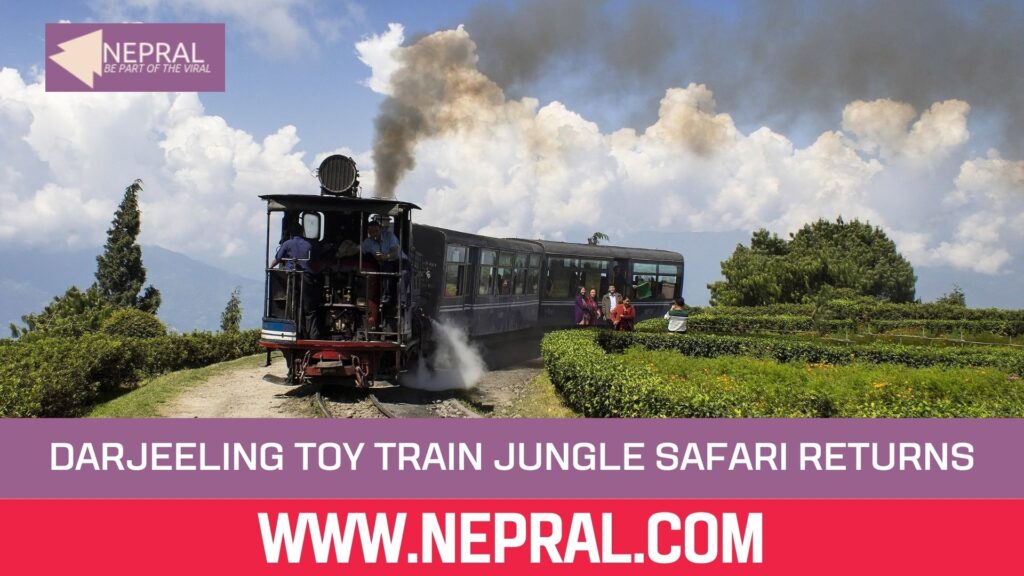

Jungle Safari Siliguri Back on Track, Darjeeling Toy Train Rolls Out New PPP Model
After a gap of nearly five years, the iconic Jungle Safari run of the Darjeeling Himalayan Railway (DHR) has been brought back to life, giving tourists a rare chance to experience the Himalayan foothills on the heritage toy train once again. The service was formally relaunched on Sunday from Sukna station near Siliguri under a new Public-Private Partnership (PPP) model, marking a fresh chapter for one of eastern India’s most unique tourism offerings.
The revival comes at a time when tourist arrivals in North Bengal and the Darjeeling hills are steadily increasing, especially during the winter season. Railway officials and tourism stakeholders see the Jungle Safari as a way to not only offer visitors something different from the usual hill station trips but also to support the local economy by drawing travellers to lesser-known locations along the DHR route.
A heritage journey through forests and tea gardens
The Jungle Safari operates on the UNESCO-recognised Darjeeling Himalayan Railway track between Siliguri Junction and Ghayabari, a stretch known for its dense forests, misty hills and sprawling tea estates. Unlike the regular toy train rides focused mainly on Darjeeling town, this safari is designed as a full-day leisure experience that combines scenic travel, food and local culture.
The journey begins in the morning from Siliguri, with passengers travelling through the green corridors of Sukna, Rongtong and other forested sections before reaching Ghayabari, located in the lower hills of Darjeeling district. After spending time there, the train returns to Siliguri by evening.
Railway officials say the route has been carefully chosen because it offers uninterrupted views of the Eastern Himalayas without the congestion often seen in central Darjeeling. “This part of the DHR line gives travellers a very natural and peaceful experience, which is what today’s tourists are increasingly looking for,” a senior railway officer said.
What the Jungle Safari Siliguri package includes
Under the new PPP format, the safari has been structured to cater to different types of travellers, from budget tourists to those looking for a more comfortable, all-inclusive outing.
The train has three coaches:
- Two premium coaches are operated by the private partner and offer a complete day-long package.
- One budget coach is run by the railway, aimed at travellers who prefer a simpler, lower-cost option.
For passengers in the private coaches, the ₹2,199 per person package includes:
- Breakfast at the start of the journey
- Lunch and light refreshments
- A serving of Darjeeling’s famous momos in the evening
- Cultural programmes at Ghayabari, including Nepali folk songs and dance
- Onboard support staff such as hostesses and security personnel
Those travelling in the railway-operated coach can buy a one-way ticket for ₹500 or a return journey for ₹1,000. However, this option does not include food or additional services.
According to railway officials, the seating capacity across all three coaches is about 50 passengers, allowing for a more relaxed and personalised experience compared to crowded tourist trains.
Why the service was revived now
The Jungle Safari Siliguri was first introduced several years ago but was discontinued due to operational and commercial challenges. With tourism slowly recovering after the pandemic and demand for heritage and nature-based travel rising, DHR decided to bring it back in a more sustainable way.
DHR Director Rishabh Chowdhury said the PPP model would allow better promotion and service quality. “By working with private partners, we can reach more tourists and ensure that the experience meets modern expectations while still preserving the heritage of the toy train,” he said.
He also confirmed that passenger safety is a top priority. Night operations will not be allowed, and newly acquired DHR engines are being deployed to ensure smoother and more reliable services. One of the three new engines has already been assigned to the Jungle Safari, with the others planned for future routes.
Part of a wider tourism strategy
The relaunch of the Jungle Safari Siliguri is not a standalone move. Railway authorities have indicated that more such special services are planned, including additional heritage and nature-based rides aimed at attracting tourists beyond the main Darjeeling town circuit.
Officials from the Northeast Frontier Railway say the goal is to highlight places like Ghayabari, Sukna and Rongtong, which often remain overlooked despite their scenic appeal. “When tourists visit these areas, it benefits local guides, performers, food suppliers and small businesses,” an official said.
The private operator involved in the project also stressed that the safari has been designed as a “curated experience” rather than just a train ride. “We want people to relax, enjoy the views, taste local food and feel the culture of the hills, all in one day,” a company representative said.
Tourists welcome the return of Jungle Safari Siliguri
The first day of operations saw around 30 passengers across the three coaches, and early reactions have been positive. Visitors described the experience as peaceful, well-organised and nostalgic, especially for those who had travelled on the toy train years ago.
A tourist from Patna who joined the inaugural trip said the revival brought back fond memories. “This is not just a ride, it’s an emotion. Everything is arranged, so we can simply enjoy the journey and the beauty around us,” he said.
Looking ahead
With the Darjeeling Himalayan Railway’s Jungle Safari back on track, Siliguri and its surrounding hills are set to gain a fresh tourism boost. If the service continues to attract steady interest, it could pave the way for more heritage-based travel options in North Bengal, helping preserve the historic toy train while also creating new economic opportunities for the region.
As winter footfall in the hills remains strong, the success of this revived safari may well shape how heritage tourism is promoted in eastern India in the years to come.