
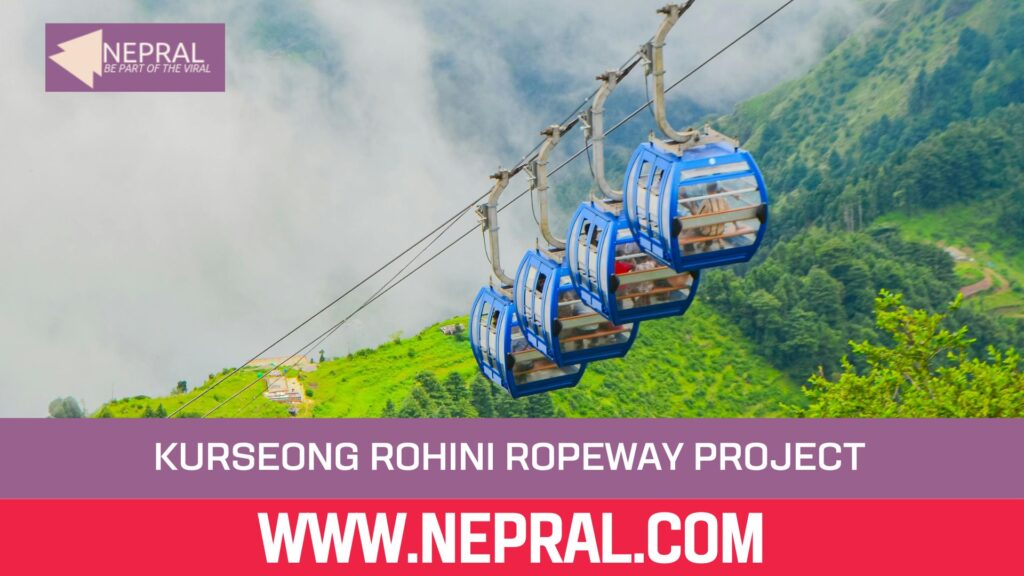

Advocate Bandana Rai Announces High Court Move Over Delayed Rohini Ropeway Project in Kurseong
Kurseong, February 14, 2026: A long-pending Kurseong Rohini Ropeway Project in the Rohini area of Kurseong has returned to public attention after Advocate Bandana Rai announced plans to approach the High Court over alleged financial irregularities and unpaid wages to workers.
In a video statement released on Friday, Rai said a writ petition would be filed within the next month seeking judicial intervention into what she described as prolonged delays and possible misuse of public funds in the Vultures–Mountain–Rohini ropeway project. The project, approved more than a decade ago, remains incomplete despite its initial timeline promising swift execution.
Her announcement has once again raised questions about project oversight, financial accountability, and the welfare of workers engaged in public infrastructure schemes in the Darjeeling hills.
Project Approved in 2014, Still Incomplete
According to details shared by Rai, the Kurseong Rohini Ropeway Project was sanctioned in 2014 with a target to complete construction within approximately 18 months. However, nearly 12 years later, the infrastructure remains unfinished.
Local residents say the project was envisioned to boost tourism and improve connectivity in the Rohini belt, which serves as a key access route between the plains and the hill subdivisions. The ropeway was expected to enhance tourism potential while creating employment opportunities for the local population.
Instead, partially built structures now stand exposed to weather conditions, raising concerns about deterioration and safety. Rai alleged that the delay has left the project in a “chronic condition,” with no clear public roadmap for completion.
While no official statement has yet been issued regarding the current status of the project, the matter has become a subject of renewed public debate in Kurseong.
Workers Claim Five Years of Unpaid Wages
One of the central issues highlighted by Rai is the alleged non-payment of wages to workers associated with the project. She claimed that several workers have not received their dues for nearly five years.
“The workers have been facing continuous financial hardship,” she said in her video message, adding that the writ petition would demand immediate settlement of arrears.
If verified, the non-payment of wages could constitute a serious violation of labour protections under Indian law. Rai stated that affected workers are prepared to join the legal action to ensure their grievances are heard.
Labour rights activists in the region have also expressed concern that prolonged infrastructure delays often result in workers being left without legal recourse unless judicial intervention is sought.
Demand for Full Audit and Corruption Probe
In addition to wage claims, the proposed writ petition is expected to seek a comprehensive audit of the ropeway project’s finances. Rai said the court filing would call for:
- A complete financial audit of project funds
- Investigation into alleged misuse or mismanagement of public money
- Payment of all pending wages to workers
- Structural safety assessment of existing construction
- A transparent and time-bound action plan for project completion
Rai argued that public infrastructure funded by taxpayer money must be subject to accountability and transparency. She emphasized that a judicial review could clarify whether delays were caused by administrative lapses, funding gaps, or other factors.
As of now, there has been no formal response from officials directly overseeing the project. However, observers note that a High Court petition would compel concerned authorities to submit detailed records and explanations.
Appeal to GTA Chief for Immediate Intervention
Rai also urged Anit Thapa, Chief Executive of the Gorkhaland Territorial Administration (GTA), to intervene promptly in the matter.
She expressed concern over what she described as prolonged inaction by the GTA regarding the incomplete Kurseong Rohini Ropeway Project. According to her statement, administrative engagement at the highest level could help prevent further deterioration of infrastructure and address workers’ grievances before court proceedings begin.
The GTA, which oversees administrative functions in the Darjeeling hills, has been responsible for various development initiatives in the region. However, infrastructure projects in hilly terrain often face logistical and environmental challenges that can delay execution.
At the time of publication, no official clarification had been issued by the GTA regarding the allegations or the current project status.
Broader Questions on Infrastructure Oversight
The controversy surrounding the Kurseong Rohini Ropeway Project highlights broader concerns about long-delayed infrastructure schemes in hill regions.
Experts point out that tourism-oriented projects require sustained financial planning, transparent tender processes, and strict monitoring mechanisms to avoid cost overruns and structural decay. In regions like Kurseong, where tourism remains a key economic driver, stalled projects can have ripple effects on employment and investor confidence.
Civic groups have also stressed the importance of publicly accessible project updates, including budget allocations, completion milestones, and contractor details. Such transparency, they argue, can help reduce speculation and build public trust.
If the writ petition proceeds, the High Court could examine whether due process was followed in project execution and whether remedial measures are required.
What Happens Next
Rai has indicated that the petition will be filed within a month. Once submitted, the High Court may issue notices to relevant authorities, seeking official explanations.
For the workers awaiting unpaid wages, the legal route may offer a formal platform to present their claims. For residents of Kurseong, the case could determine whether the long-stalled ropeway project will finally see a clear resolution — either through completion, restructuring, or other administrative action.
Until then, the Rohini ropeway stands as a visible reminder of the challenges that can arise when public projects remain unfinished for years. The coming weeks are likely to determine whether judicial scrutiny will bring renewed momentum and accountability to the initiative.