
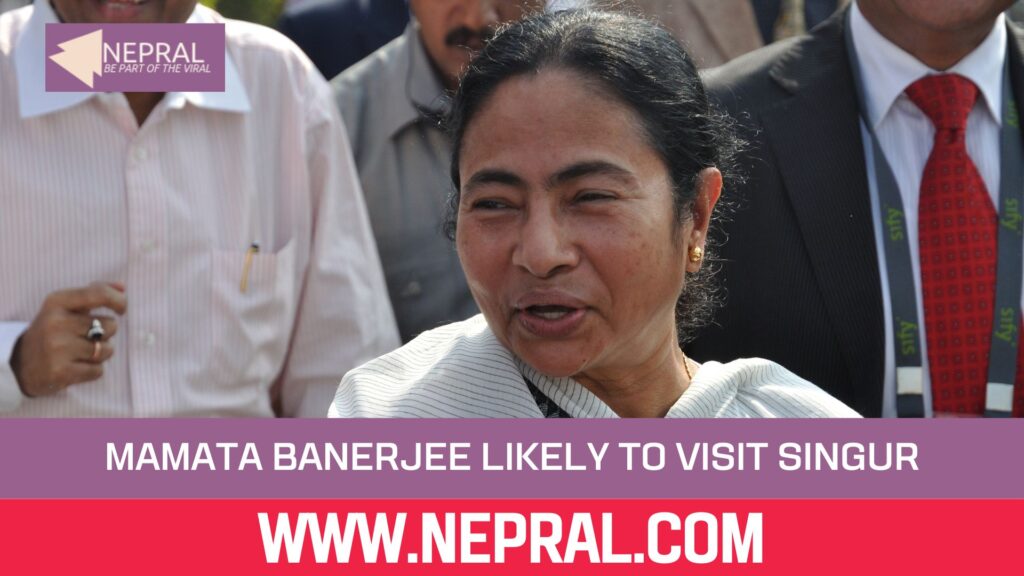

Mamata Banerjee Singur Visit Likely on January 28, Set to Combine Governance Outreach with Political Messaging
West Bengal Chief Minister Mamata Banerjee is expected to visit Singur later this month for an administrative programme that is likely to carry strong political undertones, according to party leaders and officials familiar with the preparations. The proposed visit, scheduled for January 28 if arrangements proceed as planned, comes just days after Prime Minister Narendra Modi addressed both an official event and a public rally at the same location, sharpening the political focus on the historic industrial township.
Singur, located in Hooghly district, has long occupied a central place in West Bengal’s political narrative. Once the epicentre of a mass movement over land acquisition for industrial development, the area continues to symbolise debates around industry, agriculture, governance and development. Against this backdrop, Banerjee’s expected visit is being closely watched by political observers as well as local residents.
Administrative Programme and Welfare Outreach Planned
According to sources within the Trinamool Congress (TMC), the Chief Minister is likely to chair an administrative meeting during her Singur visit. The programme is expected to focus on welfare delivery and governance, with benefits under various state-run schemes being distributed to eligible beneficiaries.
Among the key initiatives likely to feature is the ‘Banglar Bari’ housing scheme. Officials indicated that the Chief Minister may disburse the first instalment for the construction of pucca houses under the programme, which aims to provide permanent housing to economically weaker families across the state.
A senior minister from the ruling party confirmed that a meeting has been proposed but noted that final details are still being worked out. “I have heard that the Chief Minister will hold a meeting here on January 28, but the exact nature of the programme is yet to be finalised,” the minister said.
If confirmed, the event will mark a renewed administrative outreach in Singur, signalling the state government’s focus on welfare and infrastructure at a time when political activity in the region is intensifying.
Political Significance of Singur Returns to the Spotlight
Beyond governance, Mamata Banerjee Singur visit is widely seen as carrying political significance. Party leaders indicated that she may either address a separate TMC rally or incorporate political messaging into her speech at the administrative programme.
The timing of the visit has added to its importance. Prime Minister Modi addressed a large gathering in Singur on January 18, during which he criticised the state government on issues such as law and order and suggested that improved governance was essential for attracting investment to West Bengal.
While Modi’s visit included an official engagement followed by a rally, no new industrial project or investment announcement for Singur was made. Some attendees were reportedly disappointed, a sentiment that TMC leaders believe could shape the local political mood.
By choosing Singur for her next public engagement, Banerjee appears poised to respond to the Prime Minister’s remarks and reclaim the symbolic ground associated with her political rise.
Likely Emphasis on Development and Investment Claims
Party insiders suggested that if the Chief Minister addresses the gathering, she is expected to counter criticism from the Centre by highlighting the state government’s record on industrial growth, welfare delivery and investment inflows.
Singur’s historical role as a flashpoint in debates over development gives added weight to such messaging. Political analysts note that Banerjee may seek to frame the narrative around balanced development—one that combines industrial progress with the protection of livelihoods and social welfare.
“Singur is not just another venue,” said a political observer based in Kolkata. “Any statement made from here carries echoes of past movements and future promises. The Chief Minister’s words will be measured against both history and current political rivalry.”
Preparations Underway as Parties Mobilise
Preparations for Banerjee’s visit reportedly began soon after the Prime Minister’s programme concluded. Local TMC units in Hooghly district have been asked to remain ready, with arrangements expected to be made at the same ground where Modi addressed his rally.
This has set the stage for a direct political contrast, with both leaders addressing the same audience base within a short span of time. As Assembly elections draw closer, such symbolic positioning is expected to intensify across the state.
Opposition parties, meanwhile, are also watching developments closely, aware that Singur continues to influence public perception on governance, industry and land policy.
A Message Beyond Singur
While the immediate focus is on Singur, analysts believe the Mamata Banerjee Singur visit will have implications beyond the region. The combination of administrative announcements and political messaging could signal the broader strategy of the ruling party as it seeks to project governance performance while countering criticism from the Centre.
For residents of Singur, the visit may bring tangible benefits through welfare schemes and renewed attention to local development needs. For the wider political landscape of West Bengal, it represents another chapter in an ongoing contest over narrative, performance and trust.
Conclusion
As Mamata Banerjee Singur visit is likely going to be on January 28, the historic town once again finds itself at the heart of West Bengal’s political discourse. With welfare outreach, administrative review and potential political messaging all on the agenda, the event is expected to underline the state government’s approach to development while responding to recent criticism from the Centre. How effectively the Chief Minister balances governance and symbolism in Singur may shape political conversations in the months ahead.